The danger of a single answer
It is tempting to want one clear model of the subsurface: this layer here, that fault there, these properties throughout. Tidy, authoritative, easy to design against. It is also dangerous. The subsurface is inferred from limited measurements, and a single deterministic model conceals how much of it is genuinely uncertain. Designs built on hidden uncertainty fail in surprising ways.
Risk-informed engineering takes the opposite stance: it treats the ground as a distribution of possibilities, not a single picture, and designs accordingly.
From one model to many
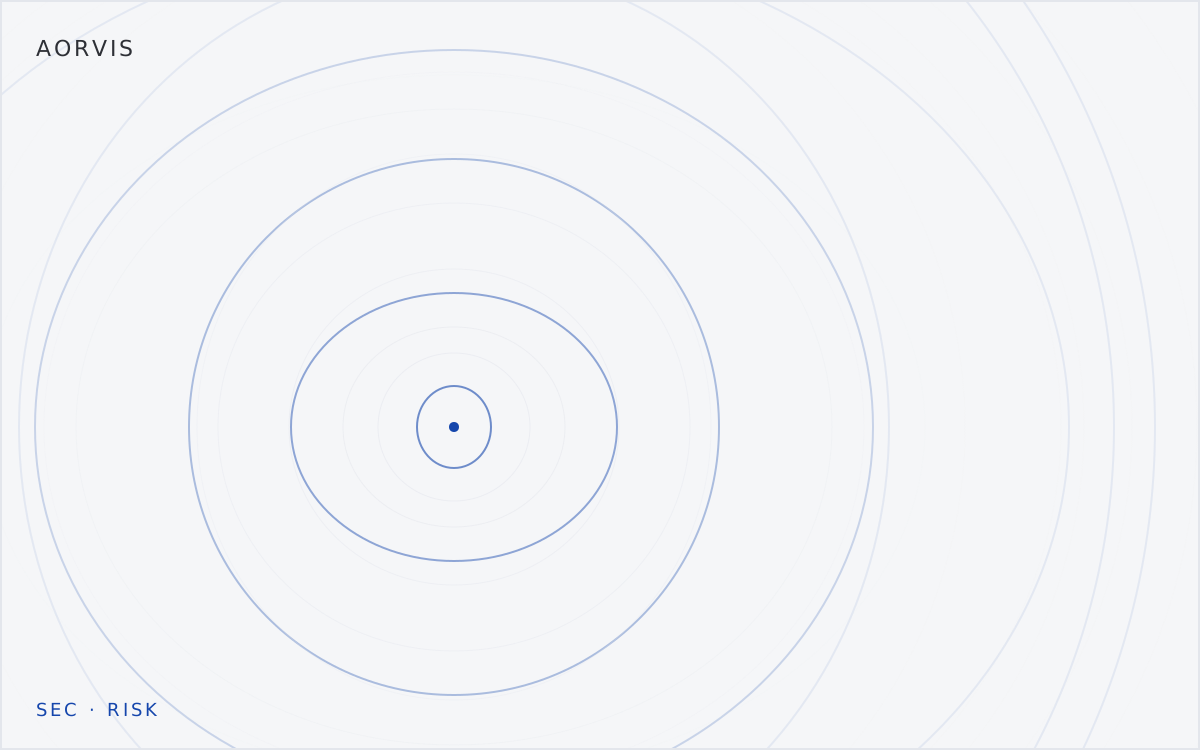
Probabilistic methods generate not one model but an ensemble — many models, all consistent with the measured data, differing where the data does not constrain them. Where the surveys are dense, the models agree, and confidence is high. Where data is sparse, they diverge, and that divergence is the honest measure of what is not known.
The spread between equally valid models is not a failure of the method. It is the most useful thing the method can tell you.
Designing against a distribution
With an ensemble in hand, an engineer can ask the questions that actually matter. Not merely what is the expected ground condition, but what is the worst plausible case, and how likely is it? How much would an extra survey reduce the uncertainty that drives the cost? Risk is quantified, priced and managed rather than buried in a single optimistic line.
An interpretation without an uncertainty is an opinion. Engineering deserves better than opinions.
Machine learning and the ensemble
Modern interpretation systems are well suited to producing these ensembles efficiently, exploring the space of models consistent with the data far faster than manual methods. Paired with the discipline of always reporting confidence, they turn geophysics into an input that engineering risk management can use directly — letting decisions follow evidence, with their uncertainty in plain sight.