The model is not the point
It is easy to be seduced by a beautiful three-dimensional render of the ground. But the render is not the deliverable; the decision it enables is. A visualisation succeeds only if a geologist, an engineer and a client can all look at it and reason correctly about what lies below. Everything else is ornament.
That reframing has consequences for how subsurface models should be built and shown.
Show uncertainty, do not hide it
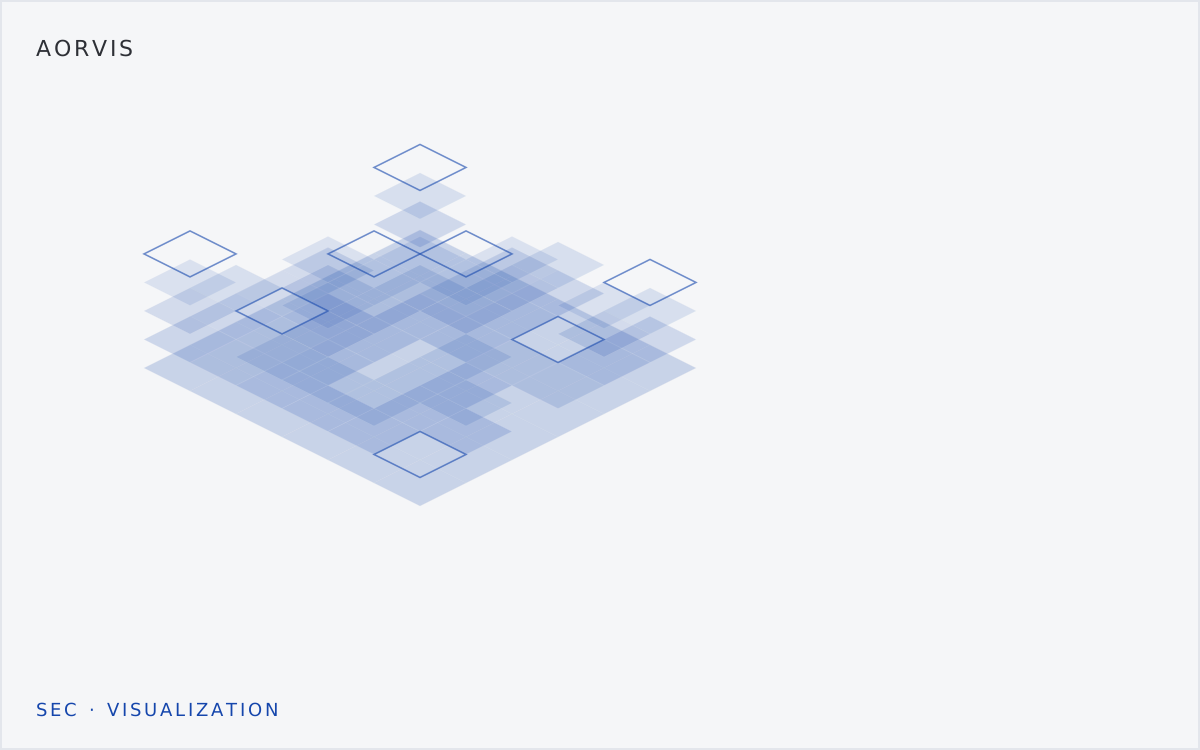
The single most important practice is honesty about confidence. Subsurface models are interpolations between measurements; some regions are tightly constrained, others are little more than educated guesses. A visualisation that renders both with the same crisp authority is actively misleading. Good practice makes uncertainty visible — through transparency, texture or explicit confidence layers — so viewers trust the model exactly as much as they should.
A model that looks equally confident everywhere is lying somewhere.
Restraint over spectacle
Colour should encode meaning, not impress. A garish rainbow palette implies precision that the data may not support and exhausts the eye. Restrained, perceptually even colour schemes let real structure stand out and keep attention on what matters. The same goes for every visual choice: each element should earn its place by carrying information.
If a feature on screen does not help someone decide, it is competing with the features that do.
Interaction and shared reference
A static cross-section serves the specialist who drew it. An interactive model — sliceable, navigable, comparable across time — serves the whole team. When everyone reasons from the same explorable picture, the model becomes a shared language rather than a specialist artefact, and decisions improve because the conversation is grounded in something everyone can see. That, in the end, is the entire purpose: not to depict the subsurface impressively, but to let people understand it together.